

By Mania, Senior Style Editor at WFashionLady
Summer skin runs on humidity and extra oil, so light gel products do the job. The moment fall’s dry winds set in, that balance shifts, and a routine that worked in August can leave skin tight and dull by October. Here’s the routine that actually holds up once the weather turns.
Switching From Summer to Fall Products
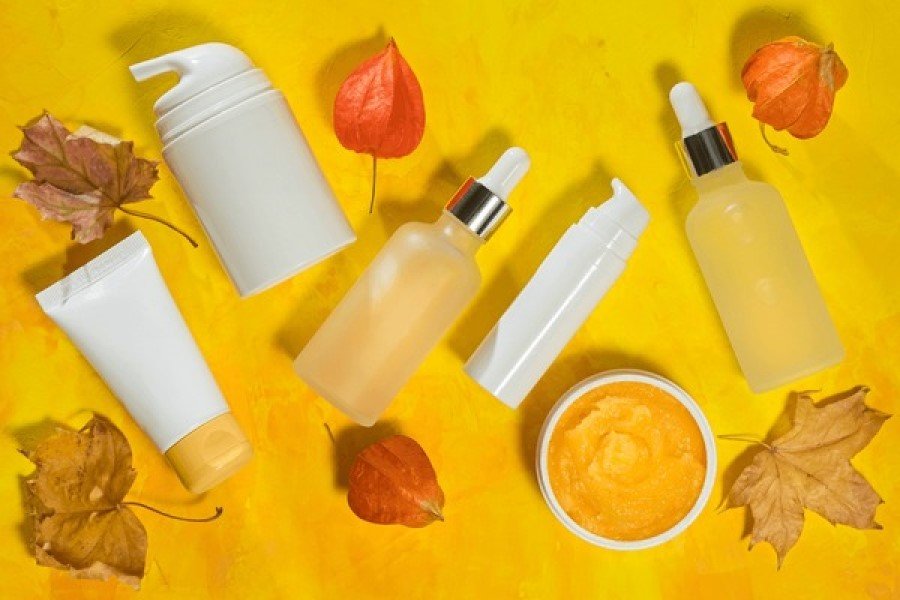
The cleanser is usually the first thing to change. Foaming or deep-cleansing gel cleansers, which work well when skin runs oily in summer, get swapped for a gentle cream-based cleanser once fall sets in. Light lotions get replaced too, with creams built to lock in hydration rather than just sit on the surface.

The Morning Routine
Cleanser: A gentle wash, like Cetaphil.
Hydrator: A light hydrating toner with panthenol.
Serum: Niacinamide, for oil control and barrier support.
Moisturizer: A lightweight ceramide cream.
SPF: A broad-spectrum SPF 50 that doesn’t leave a white cast.

The Night Routine
Cleanser: The same gentle cleanser, double cleansing if makeup was worn during the day.
Serum: Hyaluronic acid, applied on damp skin so the moisture locks in properly.
Moisturizer: A richer, thicker cream with ceramides or peptides, to support overnight repair.

The Two Ingredients Worth Prioritising
Ceramides and hyaluronic acid make the biggest difference once the cold, drying wind sets in. Ceramides act like a shield, keeping moisture from evaporating out of the skin. The difference shows up clearly, since flakiness stops almost entirely once they’re part of the routine.
Does Oily Skin Still Need Ceramides?
A common misconception is that oily skin doesn’t need ceramides or heavier creams. In reality, fall’s dry air dehydrates oily skin just as much as any other skin type, from the inside out.
Mania has seen this play out directly with a close friend, whose skin runs combination-to-oily. Last fall, she assumed her usual light gel routine would carry her through the season. Instead, her skin started producing more excess oil than usual, as it tried to compensate for the lost moisture, while her cheeks turned dry at the same time.
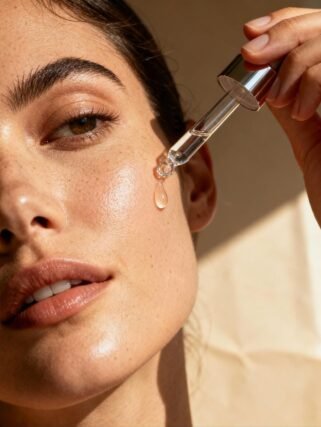
The better approach for oily skin isn’t heavy, clogging creams, but lightweight gel-creams or fluid emulsions that contain ceramides and niacinamide. These repair the skin barrier and lock in hydration without blocking pores. For drier skin types, richer ceramide creams and facial oils work best.
Combination Skin: Treating the T-Zone and Cheeks Differently
Combination skin faces the toughest version of this challenge, since fall behaves almost like two seasons on one face. The T-zone, meaning the forehead, nose, and chin, tends to stay fairly balanced or slightly oily, while the cheeks can turn dry and tight almost overnight.
Applying one heavy moisturizer across the whole face tends to clog the T-zone and cause breakouts, while a single light gel leaves the cheeks feeling stretched and dry. The practical fix is multi-texturing, or layering different products strategically across the face. A richer ceramide cream goes on the cheeks and jawline where dryness shows up, while the T-zone gets a lighter, balancing gel-cream or hydrating lotion. That one adjustment keeps the whole face in balance.
Quick Reference: Matching Your Skin to the Right Product
| Skin Type / Area | What to Use | Key Ingredients |
|---|---|---|
| Oily / combination-to-oily | Lightweight gel-cream or fluid emulsion | Ceramides, niacinamide |
| Dry skin | Richer ceramide cream, facial oil | Ceramides, hyaluronic acid |
| Combination — T-zone | Light, balancing gel-cream or hydrating lotion | Niacinamide |
| Combination — cheeks / jawline | Richer ceramide cream | Ceramides |
| Night, all skin types | Hyaluronic acid serum (on damp skin) + ceramide or peptide cream | Hyaluronic acid, ceramides, peptides |
The Mistake Worth Avoiding
A common mistake is holding onto summer’s lightweight gel moisturiser through fall, out of concern that skin will turn oily. In practice, this usually backfires, since skin ends up dehydrated, tight, and dull from the inside. Switching products as soon as the weather changes, rather than waiting it out, avoids this altogether.
What Didn’t Work
Heavy physical scrubs, once used to slough off dead skin in fall, made skin redder and more sensitive instead of smoother. Physical exfoliation tends to break down the skin barrier during this season, which is reason enough to stay away from it once the weather turns.
Why SPF Still Matters in Fall
A common misconception is that softer fall sunlight means SPF can be skipped. Last fall, as the sun started feeling gentler, Mania cut back on SPF for a few days, assuming there was no summer-level tanning to worry about. Within two weeks, she noticed skin unevenness and pigmentation looking more pronounced rather than fading, since the cold, dry wind was making UV exposure hit the skin harder rather than softer.
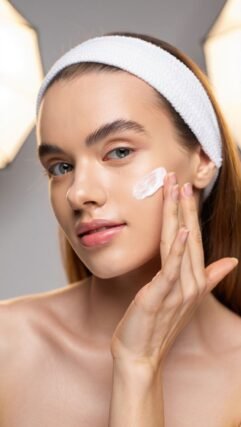
UVA rays, the ones responsible for aging and pigmentation, stay just as present in fall and winter even when it feels cloudy or cool, and dry skin tends to show their effects faster. SPF 50 has stayed a fixed part of the morning routine ever since, no matter how mild or overcast the weather looks.
The Layering Order That Actually Matters
Even the right products won’t do much if they’re applied the wrong way. The sequence and timing between steps make a real difference to how much of a product actually absorbs.
The damp skin rule is the single biggest trick here. Hyaluronic acid and hydrating toners should always go on slightly damp skin, never fully dry skin. Applying them on dry skin can actually pull moisture out rather than lock it in. After washing her face, Mania doesn’t dry it completely with a towel. Instead, she taps the serum in while the skin is still a little damp.
Waiting between steps matters just as much. After applying a serum, waiting 60 to 90 seconds before moisturizer gives it time to properly penetrate the skin. Layering products on top of each other too quickly means nothing goes past the surface.
The full sequence looks like this: cleanser, then a damp-skin hydrating toner or serum, a one-minute wait, moisturizer, then SPF in the morning or a facial oil drop at night if needed.
A Few Precautions Worth Keeping in Mind
Any time a new active ingredient is introduced, whether it’s a fresh serum or a stronger cream, patch-testing it on a small area first is worth the extra day or two, since skin can react differently once the weather changes.
If retinol or exfoliating acids are already part of a routine, fall is often when people try reintroducing them after a summer break. Easing back in gradually, rather than resuming at the same strength used before, gives the skin barrier time to adjust alongside the season change.
How Long the Full Routine Takes
The morning routine, from cleansing through SPF, takes about 5 to 7 minutes. The night routine runs a little longer, closer to 10 minutes, since hydration needs to be layered in steps. Combined, the full routine comes to roughly 15 to 17 minutes a day.
Where to Save and Where to Splurge
For budget-friendly options, Ponds Super Light Gel works well for early fall, and Derma Co or Minimalist serums are affordable while still delivering good results with daily use.
For a splurge, La Roche-Posay Cicaplast Baume B5 or Clinique Moisture Surge are worth it if the skin barrier has properly crashed. Both are the kind of product that lasts a long time per tube, so the higher price stretches out.
A Weekend Ritual for Extra Hydration
Beyond the daily routine, fall weather calls for a little extra care every so often. On Saturday or Sunday nights, if the air has left skin feeling drier or duller than usual, Mania adds one extra step to the night routine.

After the usual moisturizer, she either applies a soothing sheet mask for around 15 minutes, or, if skin is especially dry, applies a slightly thicker layer of her regular ceramide cream and leaves it on overnight, a simple version of the slugging method. It works like a mini facial, and skin feels noticeably plumper and softer the next morning.
A Real Moment This Routine Made a Difference
Last year, when the temperature dropped suddenly, dry patches started forming near Mania’s nose, and makeup began looking cakey almost immediately. She added an extra hydrating layer, a ceramide cream, into the routine right away. Within three days, the flakiness was gone. At an event shortly after, a friend asked her directly why she had no dry patches when everyone else around her did. That was the moment it became clear how much switching products at the right time actually matters.
FAQ
Q: Should I patch-test new skincare products before adding them to my fall routine?
A: Yes. Testing a new active on a small area first for a day or two is worth doing, since skin can react differently as the weather changes.
Q: Is it safe to start using retinol again once fall begins?
A: It’s best to reintroduce it gradually rather than at full summer strength, giving the skin barrier time to adjust to the season change.
Q: How should combination skin be treated in fall?
A: Differently across the face. A richer ceramide cream works on the cheeks where dryness shows up, while the T-zone does better with a lighter, balancing gel-cream.
Q: Should I skip SPF in fall since the sun feels softer?
A: No. UVA rays stay just as present in fall and winter, and dry skin can show pigmentation and unevenness faster if SPF is skipped.
Q: Why does applying products on damp skin matter?
A: Hyaluronic acid and hydrating toners work better on slightly damp skin, since applying them on fully dry skin can pull moisture out instead of locking it in.

