

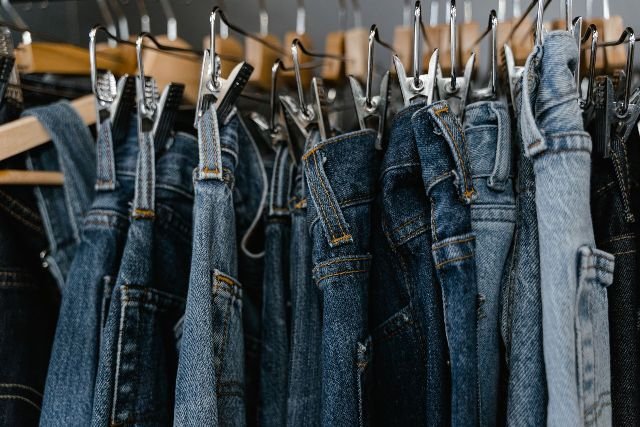
Black jeans don’t fade evenly. They go grey at the knees and thighs first, while the waistband stays dark enough to show exactly how much colour the rest has lost. It’s the contrast that makes a pair look worn out — not the overall lightening.
I learned this the expensive way. I used to wash my black jeans after every single wear, straight into the machine and then straight into the dryer, because that felt like taking care of them. One pair went visibly grey at the knees within about two months — that was only four or five washes. The care I thought I was giving them was the thing wearing them out.
Here’s what’s actually happening, what to change, and which widely repeated fixes do nothing.
Key Takeaways
- Two separate mechanisms cause fading: abrasion (physical rubbing) and chemical stripping (heat + detergent). They need different fixes.
- Wash every 5–10 wears, not after every wear. Washing after every wear left my own jeans with visible grey knees within about five washes. This is the single biggest factor, and it costs nothing.
- Wash inside out, in cold water (30°C / 86°F or below), on a gentle cycle.
- Most mainstream detergents contain optical brighteners that leave black fabric looking hazy. Use a liquid formulated for dark fabrics.
- Skip the tumble dryer. Heat strips colour, and tumbling abrades the surface for the entire cycle.
- Vinegar and salt do nothing to finished denim — both come from dyeing methods that don’t apply once a garment is manufactured.
- Abrasion fading can’t be reversed. Dye loss can be partly corrected; stitching will still stay lighter.
Why Black Jeans Fade in the First Place
Two separate things strip colour from black denim, and they need different solutions.
Abrasion. Denim dye sits mostly on the outer surface of the cotton yarn rather than soaking all the way through — a characteristic of ring-dyed and surface-dyed cotton generally. Every time the fabric rubs — against itself, a chair, or the washing machine drum — a thin layer of dyed fibre wears away and exposes paler fibre underneath. This is why knees and thighs go first: it’s friction, not water.
Chemical stripping. Hot water opens the cotton fibre structure, and alkaline detergents lift dye out of it. Optical brighteners, present in most mainstream detergents, then make the remaining colour read as washed-out and slightly blue-grey. Brighteners work by absorbing UV light and re-emitting it as visible blue, which reads as brightness on white fabric but as haze on black.
My old routine was hitting both mechanisms at once, on repeat, every few days.
The Three Changes That Matter Most
1. Wash Far Less Often
This is the single biggest factor, and it’s free. Every wash cycle is a full round of abrasion plus chemical exposure. Cutting from “every wear” to “every eight wears” doesn’t just mean fewer trips to the laundry room — it removes roughly seven full cycles of abrasion and chemical exposure between each wash.
Wash when jeans smell, when they’re visibly marked, or when the knees have stretched out of shape — not on a fixed schedule. For most people that means every five to ten wears. Spot-clean small marks with a damp cloth and let the jeans air out overnight instead of putting them straight in the basket.
2. Wash Cold, Inside Out, on a Gentle Cycle
Cold water means 30°C (86°F) or below. Many machines have a 20°C (68°F) or cold-fill setting, and modern detergents are formulated to work at those temperatures.
Turning jeans inside out means the outer face — the side you see — rubs against the drum less. Zip zips, fasten buttons, and wash black denim only with other dark items. A gentle or delicates cycle reduces agitation, which reduces abrasion directly.
3. Change the Detergent
Mainstream laundry detergents are formulated to make whites look brighter. The optical brighteners that do this deposit on dark fabric and give it a washed-out, hazy cast. Alternating between whatever powder or liquid happened to be in the cupboard was part of what wore my own jeans out early.
What to check on the label: look for a liquid detergent that’s free of both optical brighteners and bleach or oxygen-based whitening agents. Labels flagging “no optical brighteners” or “colour-safe” are the easiest shortcut; if you want to check ingredients directly, brightener compounds are usually listed as stilbene derivatives or fluorescent whitening agents (FWAs). Detergents marketed specifically for dark or black fabrics are formulated for exactly this, and are widely available in the US, UK and across Europe for roughly $8–$15 / £6–£12 / €7–€14 per bottle. Prices vary by region and retailer.
Powder detergents tend to run more alkaline than liquids and are generally harsher on dark dye. Skip fabric softener too — it coats fibres and can make dark fabric look dull over time.
Myths vs. What Actually Works
Myths That Don’t Work
| Popular Fix | Verdict | Why |
|---|---|---|
| Vinegar in the wash | No effect | Vinegar sets dye during acid-dyeing processes, but modern denim dye is already fixed to the fibre during manufacturing — there’s nothing left for a home acid rinse to bond. |
| Salt in the wash | No effect | Salt draws dye onto fibre during commercial dyeing. Once a garment is finished and excess dye rinsed out, salt at home has nothing to act on. |
| Freezing your jeans | No meaningful effect | Freezing doesn’t reliably kill most odour-causing bacteria — many strains survive cold and resume activity at room temperature — and it does nothing to remove oils or dirt. |
Habits That Work
| Change | Verdict | Why |
|---|---|---|
| Washing less often | Effective | Removes a full round of abrasion and chemical exposure each time you skip a cycle. |
| Cold water, inside out | Effective | Reduces both dye stripping (less heat, less fibre swelling) and surface abrasion (less friction on the visible face). |
| Skipping the dryer | Effective | Removes around 40 minutes of heat and continuous tumbling per cycle. |
The Part I Got Wrong for Years: Drying
I always dried my laundry in the shade rather than direct sun, and assumed that was the careful choice — it is, for UV damage. But I was then putting the jeans in a dryer, which undoes that benefit entirely.
A tumble dryer is rough on black denim in two ways at once: heat continues stripping colour, and the tumbling is sustained abrasion for 40 minutes or more. Some of the lint in the filter is your jeans.
Hang them to dry instead — inside out, away from direct sunlight. UV light degrades dark dye faster than shaded air-drying, so a pair dried repeatedly on a sunny line will show noticeably more fading than one dried in shade. If you need jeans dry quickly, a short cool tumble to finish is a reasonable compromise — just don’t run a full hot cycle.
How Long Should Black Jeans Stay Black?
| Routine | Wash Frequency | Drying | When Greying Typically Shows |
|---|---|---|---|
| High-frequency | Every wear | Tumble dryer | ~4–6 washes |
| Typical | Every 2–3 wears | Mixed (dryer sometimes) | ~15–25 washes |
| Low-frequency | Every 5–10 wears | Hang dry, shade | Well beyond 25 washes |
The high-frequency row reflects my own experience. The other two are general ranges rather than measured results, so treat them as a directional guide. Fabric composition matters too, though not always the way people assume — my own jeans are 100% cotton with no elastane, and they still faded fast on a harsh routine. How you wash matters more than what they’re made of. Check the composition label before buying if longevity is the priority.
Reviving Jeans That Have Already Faded
Fading from abrasion can’t be reversed — the fibre is physically worn away. Fading from dye loss can be partly corrected with dye.
Home dye kits for cotton are sold in most US and UK supermarkets and craft shops, usually $6–$12 / £5–£9 / €6–€11 per pack. They work reasonably well on 100% cotton denim and less well on stretch denim, because elastane and the polyester used in seam thread don’t take dye the way cotton does. Test on an inside seam allowance first, and follow the packet’s fabric-weight instructions — a pair of jeans is heavier than most people estimate, and under-dosing gives patchy results.
Whichever route you take, expect the stitching to stay visibly lighter than the fabric around it, since polyester thread resists dye almost entirely. In South Asia and parts of the Middle East, taking a garment to a professional dyer is routine and costs about the same as a home kit — someone who does this daily will get a more even result than a first home attempt.
Two Exceptions to This Advice
Raw or unwashed denim. If your jeans are labelled raw or dry, they’re meant to fade, and the fade pattern is the point. Different care rules apply entirely.
Coated or waxed black jeans. The colour here is a surface finish, not a dye. It will crack and rub off at stress points regardless of how carefully you wash, and dyeing won’t fix it. Wash these as little as possible and accept a shorter life.
The Routine, Condensed
- Wash every 5–10 wears, not after every wear
- Turn inside out, fasten zips and buttons
- Cold water — 30°C (86°F) or below
- Gentle cycle, dark items only
- Liquid detergent with no optical brighteners; no fabric softener
- Hang dry inside out, in shade — skip the dryer
- Skip the vinegar and the salt
Frequently Asked Questions
Does washing black jeans in cold water really stop fading?
It slows fading substantially but doesn’t stop it entirely. Cold water reduces the chemical side of dye loss. Abrasion still happens in every wash regardless of temperature, which is why washing less often matters more than washing cold.
Should I wash new black jeans before wearing them?
Yes — one cold wash removes loose surface dye that would otherwise transfer to light furniture, bags and car seats. Wash them separately the first time, then follow the routine above.
Why do my black jeans look grey after only a few washes?
Usually a combination of wash frequency and detergent choice. Optical brighteners in mainstream detergents deposit on fabric and reflect light in a way that reads as washed-out on black. Switching to a brightener-free detergent, and running one wash with no detergent to rinse out residue, often improves appearance noticeably.
Can I stop black jeans fading at the knees specifically?
Only partly. Knee and thigh fading comes from abrasion during your own movement, so it happens with wear no matter how you wash. Washing less often just means fewer additional rounds of abrasion stacked on top of the wear that’s unavoidable.
Is a tumble dryer really that bad for black jeans?
Worse than most people expect. Heat strips colour and tumbling abrades the surface for the full cycle length. Drying in shade and then finishing in a dryer — a common habit — gives up most of the benefit of the shade step.
What to Do First
Change two things this week: stretch the wash interval, and stop putting black denim in the dryer. Those two account for most of the difference, cost nothing, and require no new equipment — just a little more patience with the laundry basket.

