

By Mania, Senior Style Editor at WFashionLady
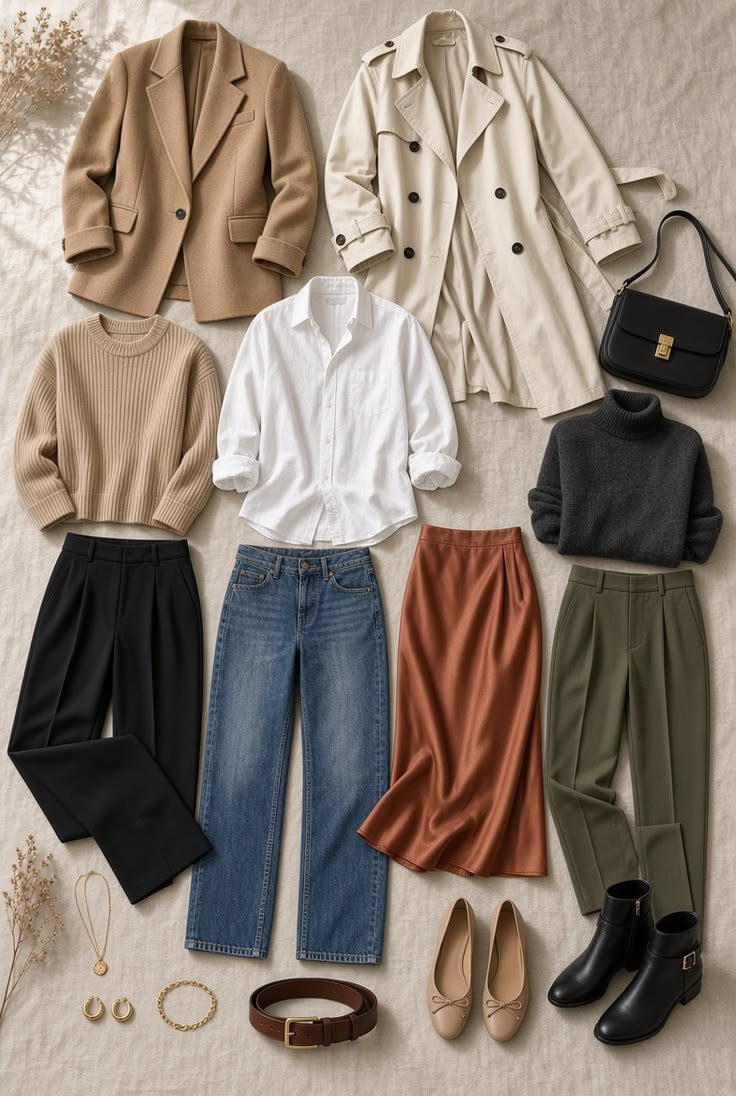
A 16-piece fall capsule sounds restrictive — until you run the math. Five tops and four bottoms alone give you 20 unique pairings before a single sweater or coat gets added. That’s the real appeal of a tight capsule: not fewer choices, but fewer dead-weight pieces sitting unworn. Here’s the exact 16 I’ve built mine around, down to the fabric label, plus the one piece that broke this rule last year.
The Exact 16 Pieces — Fabric, Composition, and Use-Case
Not vague “cotton blend” labels — the real percentages off my own garment tags, and exactly when each piece gets worn:
| # | Piece | Fabric Composition | Primary Use-Case |
|---|---|---|---|
| 1 | Ribbed cotton long-sleeve tee (cream) | 95% cotton, 5% elastane | Daily base layer — elastane keeps elbows from bagging out |
| 2 | Ribbed cotton long-sleeve tee (espresso) | 95% cotton, 5% elastane | Rotates with #1 for daily wear |
| 3 | Turtleneck (sage green) | 70% modal, 30% poly-blend | Solo wear or under blazers — poly keeps shape after repeat washes |
| 4 | Button-down blouse (butter yellow) | 60% cotton, 40% viscose | Office/dress-up — drape without crumpling like pure cotton |
| 5 | Silk-blend camisole (beige) | 70% silk, 30% polyester | Thin layer under blazers — shine with everyday durability |
| 6 | Wide-leg cream trousers | 98% cotton, 2% elastane | The compliment-outfit piece — pairs with almost everything |
| 7 | Tailored dark denim | 99% cotton, 1% spandex | Daily driver — classic rigid feel without stiffness |
| 8 | High-waisted trousers (espresso) | 40% wool, 60% polyester/viscose | Office — warmth without itch, resists sitting-wrinkles |
| 9 | Midi skirt (sage green) | 100% viscose (rayon) | Transitional piece — graceful movement fabric can’t fake |
| 10 | Cashmere-blend crewneck (beige) | 30% cashmere, 70% merino wool | Warmest piece that still layers under a coat |
| 11 | Cashmere-blend crewneck (burgundy) | 30% cashmere, 70% merino wool | This year’s second trend color |
| 12 | Chunky knit cardigan (sage green) | 80% acrylic, 20% wool | Most-complimented piece — acrylic keeps chunky knit lightweight |
| 13 | Fine-knit cardigan (espresso) | 70% cotton, 30% nylon | Sleek layering on warmer fall days |
| 14 | Trench coat (beige) | 65% cotton, 35% polyester (gabardine) | Structured outer layer — light rain/mist protection |
| 15 | Tweed blazer (espresso check) | 85% wool-blend tweed | Instant polish, replaces a heavy coat on mild days |
| 16 | Scarves — modal-silk (sage) + viscose-wool (espresso) | Modal-silk blend / viscose-wool blend | Fastest way to signal fall without changing the outfit |
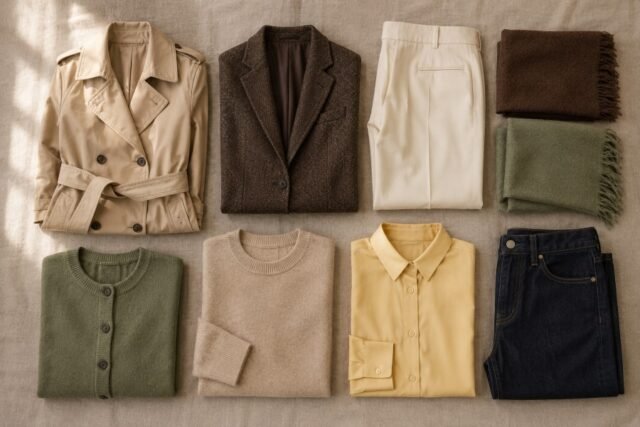
The Math: How 9 Pieces Become 30+ Outfits
Here’s the actual arithmetic, not a rounded-up marketing number: 5 tops × 4 bottoms (trousers, denim, espresso trousers, midi skirt) = 20 unique base pairings before a single sweater or coat is added. Layer any of the 4 knitwear pieces or 2 outer layers over even half of those pairings, and the practical number clears 30 distinct looks — without double-counting a scarf swap as a “new” outfit. That’s the actual ceiling this capsule hits, not an inflated estimate.
The “Dead Weight” Mistake I Made Last Year
I’ve made this mistake myself. Last year I ordered an oversized fleece-lined zip-up hoodie online — it looked incredibly cozy in the photos. In reality, it became total dead weight: too thick to wear any coat over, and shapeless worn alone. That’s when it clicked — warmth alone isn’t enough; the fall and structure of the fabric matter just as much. If a piece can’t layer under or over anything else, it doesn’t earn its spot.
Solving the “Michelin Man” Layering Problem
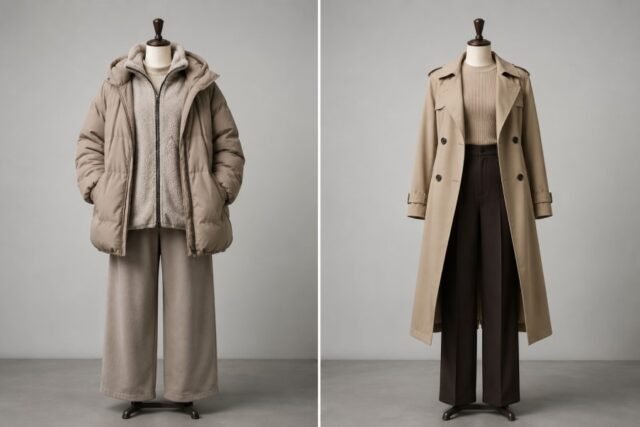
The biggest enemy of fall layering is turning into the Michelin Man — thermal, sweater, heavy coat, and your whole silhouette disappears into a round, bulky shape. My fix: thin-but-warm base layers (95% cotton/5% elastane tees, 70% modal turtlenecks) instead of bulky sweaters, paired with structured blazers or coats that keep a clean, sleek line.
Color Palette: 70% Personal, 30% Trend
70% of my palette stays in default earthy tones — butter yellow, beige, sage green, espresso brown — because they mix and match effortlessly. The remaining 30% follows that year’s trend, usually just one or two statement pieces (this year: butter yellow and deep burgundy), so the wardrobe doesn’t feel stale.
Where I Actually Shop: Investment vs. Thrift
Good denim or a solid trench coat, I buy new — an investment built to last years. Unique sweaters, vintage blazers, and quirky statement pieces come from thrift stores and local second-hand markets, where you find things a mall’s mass-produced racks never carry.
The Outfit That Got the Most Compliments
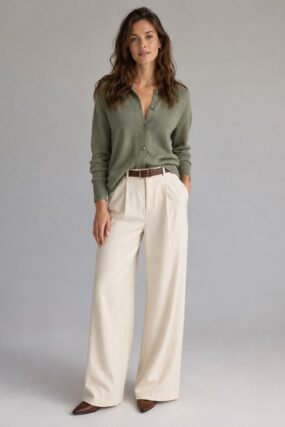
A sage green knit cardigan with wide-leg cream trousers and a thin vintage belt — no heavy styling — got more compliments than any outfit I’d actually planned. I’ve re-worn that exact combination four times since; it’s now my go-to “I don’t know what to wear” outfit.
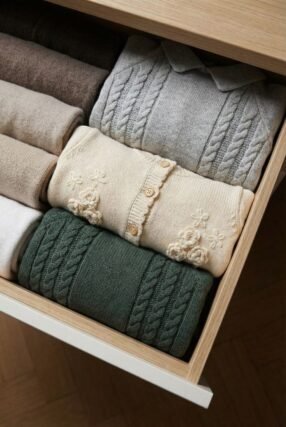
Storage Tip: Stop Hanging Your Sweaters
Hanging sweaters stretches and ruins the shoulders. Fold them and store on shelves instead. If pilling shows up, a simple fabric shaver fixes it in minutes — full steps in our sweater pilling guide.
Styling Tip for Petite Heights
Long floor-length coats or oversized long cardigans can make a shorter frame look shorter still. My trick: cropped blazers or waist-length jackets paired with high-waisted trousers — elongates the legs while still allowing easy layering.

Three More Rules I Actually Use
- One-in, one-out: before a 17th piece comes in, something leaves — usually to a thrift donation bin. This is what keeps the count at 16 instead of creeping past 20.
- Test against 3 existing pieces first: before buying anything, I mentally pair it with three items already in my closet. If I can’t picture two solid outfits, I skip it — this alone would have caught the fleece hoodie mistake.
- Rotate scarves weekly, not seasonally: swapping between the two scarves week-to-week, instead of picking one “favorite,” keeps a 16-piece wardrobe from feeling repetitive.
Frequently Asked Questions
Do shoes and bags count toward the 16-piece total?
No — this count covers tops, bottoms, sweaters, and outer layers only. Shoes, bags, and jewelry are a separate accessory rotation.
How often should a fall capsule wardrobe be refreshed?
Only when the one-in, one-out rule triggers a replacement — and only if the new piece matches at least three existing items. Otherwise, it’s better to wait than add dead weight.
Is 16 pieces too small for someone who dresses up often?
Not necessarily. The tweed blazer and wide-leg trousers go from office to evening with just an accessory swap, so the same 16 pieces stretch further than the count suggests.

