

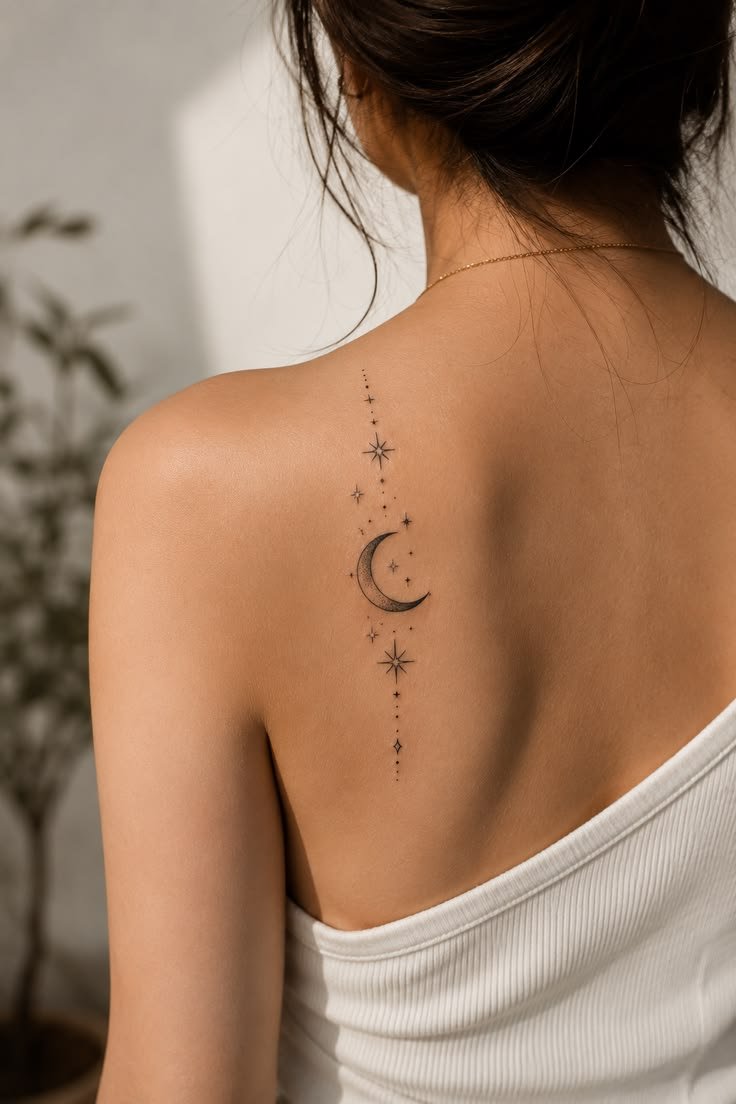
Written by the WFashionLady team, based on first-hand tattoo experiences within our own circle — including Ayman’s healed crescent moon tattoo.
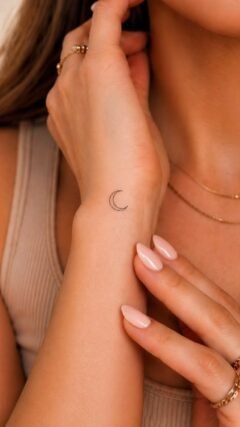
A few months ago, one of our own team members, Ayman, decided to get her first tattoo — a tiny, minimalist crescent moon on the inside of her wrist. It’s less than an inch long, took about 15–20 minutes to complete, and healed fully within 10–12 days. What surprised her most wasn’t the pain (a manageable 4 out of 10), but how much thought actually goes into choosing something so small.
In this guide, we’re sharing 10 small tattoo ideas, real placement experiences, honest pain levels, and the aftercare products that actually work, based on what our team and the people around us have genuinely gone through.
Best Placements for Small Tattoos
Before picking a design, placement is worth thinking through carefully — it affects pain, healing, longevity, and how easily you can hide or show the tattoo.
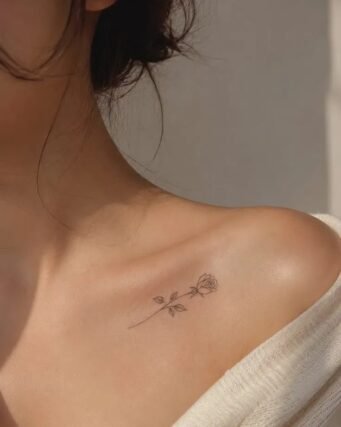
- Behind the ear / Collarbone – Both are trending placements, but the skin behind the ear is noticeably thin, so the needle’s vibration is felt more intensely there compared to most other spots.
- Fingers – They look stunning in photos, but frequent hand-washing and friction cause the ink to spread and fade far faster than almost any other placement. Expect touch-ups sooner than you’d like.
- Inner wrist – A softer, more forgiving spot for first-timers (this is where Ayman’s crescent moon sits).
- Ankle bone – Direct contact with bone makes this placement more intense than its small size suggests.
10 Small Tattoo Ideas With Real Meaning
1. Crescent Moon
Ayman chose this design while going through a major career transition. Beyond the aesthetic, it became a personal reminder: it’s okay to start small and grow slowly.
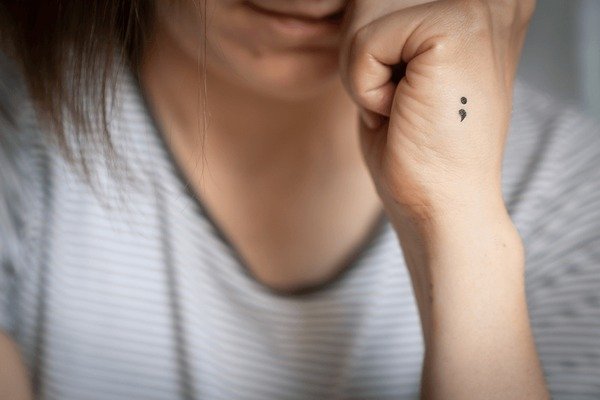
2. Semicolon (;)
A close friend of our team member Zoya has this on her wrist. It’s a well-known symbol of mental health resilience — a nod to the idea that the writer paused instead of ending the sentence, meaning your story isn’t over yet.
3. Wave Line
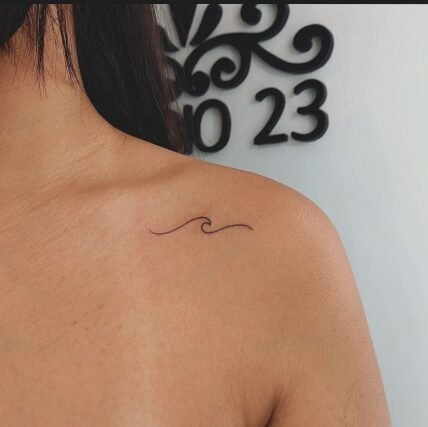
A single, minimalist wave on the collarbone, seen on a classmate of ours. Its meaning: going with the flow and accepting life’s highs and lows, especially after a chaotic period.
4. Geographic Coordinates
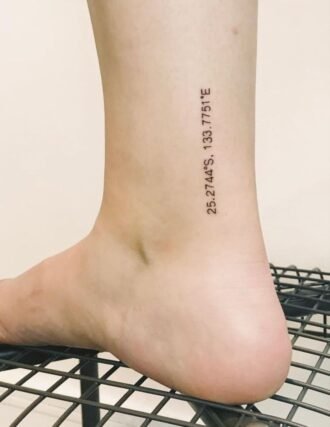
Ayman’s cousin has the coordinates of her childhood home inked on her inner ankle — a way of carrying that memory and staying grounded, no matter where life takes her.
5. Micro Butterfly
Away from the usual social media trend, one of our visual research clients got this after overcoming long-term anxiety. For her, it represented personal transformation and growth rather than pure aesthetics.

6. Open Delta Symbol (Δ)
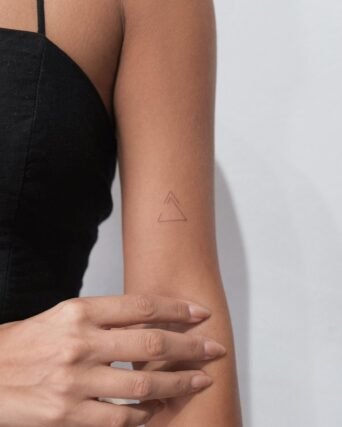
A designer friend of Zoya’s has a small triangle with one corner intentionally left open on his hand. It symbolises being open to change — accepting life’s shifts instead of resisting them.
7. Three Dots (…)
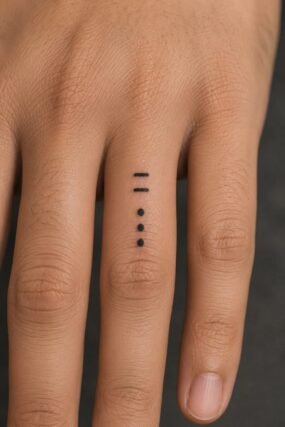
Often placed behind the ear or on the side of a finger, this design represents continuation — a sign that the journey is still in progress.
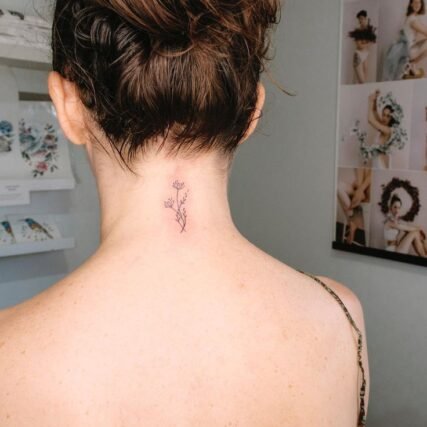
8. Wildflower Sprig
Ayman noticed this on a friend’s nape of neck. It’s commonly chosen to honour a loved one or represent self-love and resilience, since wildflowers grow freely without needing any care.
9. Single Star
A friend of Ayman’s has a tiny 4-point star on her inner wrist. Her grandfather owned an old pocket watch with the same star engraved on its dial, and during a tough career transition, she got it as a personal “North Star” — a daily reminder of her core direction whenever life felt uncertain. It looked razor-sharp on day one, but fine-line wrist placements like this need specific upkeep because of daily wrist articulation and thin tissue.
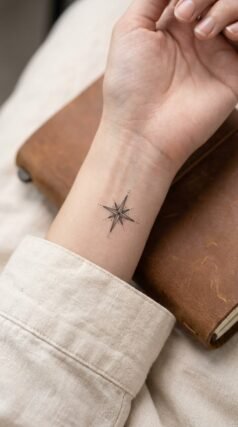
The technical side: Inner wrist skin has an epidermal thickness of only about 1.0mm–1.2mm. If ink is deposited past the dermis into the subcutaneous fat layer, pigment particles spread laterally, creating a bluish halo known as ink blowout. Micro-designs smaller than 5mm also naturally expand over time — dermal macrophages gradually shift pigment particles, widening lines by roughly 0.2mm–0.4mm over 3 to 5 years. This is why fine-line artists keep at least a 1.5mm gap between adjacent strokes on designs this small: it protects legibility as the ink settles. Because it’s so subtle on its own, a single star also blends easily into a future constellation or patchwork sleeve.
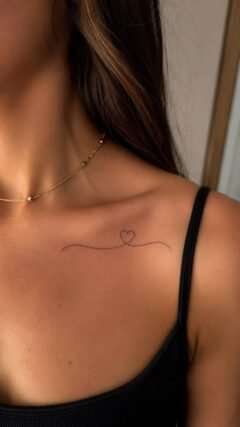
10. Heart Outline
One of Zoya’s clients got a fine-line heart outline just below her collarbone after leaving a year-long toxic relationship. As she put it, she wasn’t getting the tattoo to validate anyone else — it was to honour her own self-love journey. Kept fine and clean, a heart outline reads as discreet and personal rather than loud.
Placement Micro-Spec Breakdown
Beyond meaning, placement determines how well a fine-line tattoo actually holds up. Here’s the technical breakdown by zone:
| Placement Zone | Epidermal Thickness | Ink Retention Stability | Friction & Fading Risk | Key Aftercare Focus |
|---|---|---|---|---|
| Inner Wrist | Thin (1.0mm – 1.2mm) | Moderate (~0.3mm expansion over 3 yrs) | Medium (watch straps/clothing friction) | Switch to lightweight lotion on Day 3 |
| Fingers / Hands | Ultra-thin (0.5mm – 0.8mm) | Low (high ink migration & blowout) | High (constant washing & surface contact) | Avoid over-washing; expect touch-ups |
| Collarbone / Chest | Moderate (1.2mm – 1.5mm) | High (holds sharp fine lines well) | Low to medium | Shield from direct UV exposure |
| Ankle / Foot | Bone-adjacent (~1.0mm) | Moderate | High (sock/shoe rubbing) | Wear breathable, loose footwear |
Pain Level by Placement (Small Tattoos)
Placement — not size — is the biggest factor in how much a small tattoo actually hurts. Here’s a breakdown based on real experiences within our team and circle:
| Placement | Pain Level | What It Actually Feels Like |
|---|---|---|
| Ribcage / Under-bust | 8/10 | Thin skin and no fat mean the needle’s vibration is felt with every breath — a continuous, sharp burning sensation. |
| Ankle bone / Foot | 7/10 | Direct bone contact. Small size means it’s over in 10–15 minutes, but it feels like light pin taps against the bone. |
| Fingers & Hands | 6/10 | Nerve-dense area causes stinging, though the bigger issue is friction — frequent washing fades finger ink fast. |
| Behind the ear / Collarbone | 5.5/10 | Moderate pain, but the machine’s buzzing vibrates near the skull, which feels unusual rather than painful. |
| Inner wrist | 4/10 | Soft tissue. A mild scratch-like feeling for the first couple of minutes, then the body adjusts. |
Aftercare: What Actually Works
Generic advice like “use unscented soap” only goes so far. Here’s what’s actually been used and tested within our team through Ayman’s healing process:
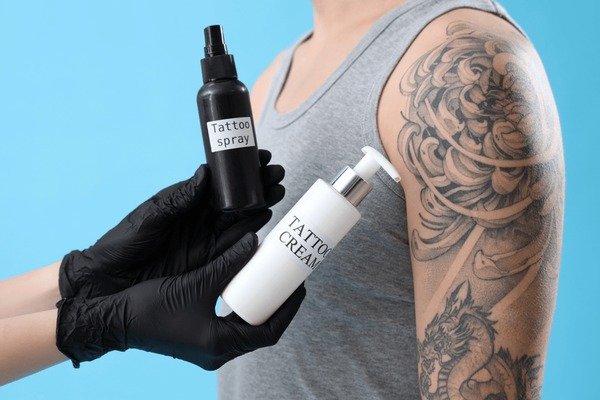
Cleansing (Day 1 onwards):
Dial Gold Liquid Soap, Unscented (US) or Carex Unscented / Sanex Zero% (UK). Fragrances and harsh chemicals irritate fresh ink.
Initial healing (Days 1–3):
Aquaphor Healing Ointment, applied in a thin layer — enough to keep the skin breathable while softening any scabbing.
Moisturising (Day 4 onwards):
CeraVe Moisturising Lotion or Cetaphil Unscented. Heavy gels can clog pores on tight, healing skin, so a lighter, hyaluronic-based lotion works better for keeping lines crisp.
According to the American Academy of Dermatology, keeping a fresh tattoo clean and moisturised — without over-occluding it — is key to reducing infection risk during the first two weeks. This lines up with what we saw during Ayman’s healing: light, unscented products worked better than heavy ointments after day 3.
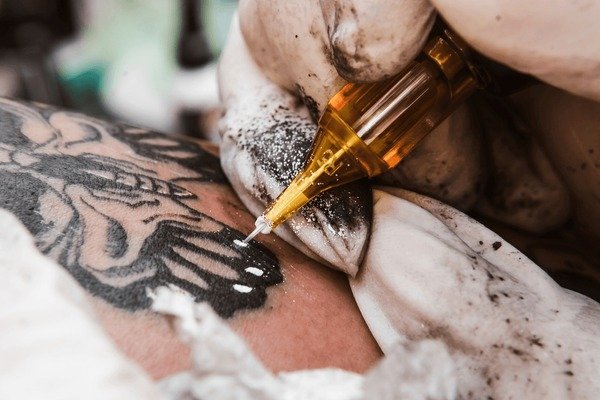
Needle gauge matters too. Standard outline tattoos are typically done with 7RL or 9RL needles, but true micro fine-line work needs finer precision — usually a #10 03RL (0.30mm “bugpin”) or #08 01RL (0.25mm micro) needle. Finer needles reduce trauma to small areas like fingers and inner wrist, which helps limit blowout risk on thin skin.
Modern healing option: Beyond soap and lotion, many studios now use polyurethane self-adhesive second-skin wraps (Saniderm or DermShield) instead of traditional open-air healing. The typical process: leave the initial wrap on for 24 hours to let it absorb plasma, remove it gently under warm running water, cleanse with unscented antibacterial soap, then apply a fresh wrap for 3–4 more days. This bypasses a lot of the scabbing phase entirely and is worth asking your artist about for fine-line work.
Fine-line tattoos, especially on high-friction areas like the wrist, tend to fade a little faster than bolder designs. Ayman needed a light touch-up around 1–2 years after her original tattoo to keep the lines sharp.
A note on darker skin tones: Fine-line retention can vary with skin type. Deeper melanin levels can make very fine lines appear slightly softer once healed, and skin prone to hyperpigmentation or keloid scarring needs extra care with healing depth and technique. It’s worth discussing this directly with your artist before booking, especially for placements like the ribcage or collarbone where scarring risk is higher.
Touch-up costs: Most studios don’t charge a full session minimum for touch-ups done within the first 90 days of healing — many fine-line studios include one free touch-up in this window as standard practice. After 90 days, expect to pay a reduced touch-up rate rather than the full studio minimum, though policies vary, so it’s worth confirming before you book.
How Much Do Small Tattoos Cost?
Pricing depends heavily on the studio type and location, but here’s a realistic range for the US and UK:

| Region / Market | Standard Shop Minimum | Specialised / Boutique Studio | Estimated Total Range |
|---|---|---|---|
| United States (USD) | $80 – $150 | $150 – $250+ | $100 – $250 |
| United Kingdom (GBP) | £50 – £80 | £90 – £150 | £60 – £150 |
In the US, most shops have a fixed minimum regardless of how small the design is, and a 15–20% tip is standard practice. In the UK, tipping isn’t mandatory, but rounding up by 5–10% is common courtesy.
Before You Book: 5 Questions to Ask Your Artist
- Can I see healed (not just fresh) examples of your fine-line work?
- What depth do you use for small/fine-line pieces to prevent early fading?
- What’s your studio’s minimum charge?
- What aftercare products do you personally recommend?
- How do you handle touch-ups if lines fade within the first year?
Frequently Asked Questions
Is a small tattoo easy to cover for job or interview settings?
Yes, in most cases. Wrist or ankle tattoos are easily hidden with a watch, ring, or long sleeve. Finger tattoos are the hardest to conceal.
Is laser removal or a cover-up cheaper for a small tattoo?
Laser sessions are priced per session, but small tattoos typically need only 2–3 sessions compared to larger pieces. Cover-ups are also generally easier to design over fine-line ink.
Do small fine-line tattoos fade or blow out over time?
Fingers and palms fade fastest due to constant friction. Wrist and collarbone placements hold their lines noticeably better, assuming the ink was applied at the correct depth.
Do you still pay full studio minimum for a tiny tattoo?
Yes. Studio minimums ($100–150 US / £50–80 UK) cover the cost of sterile equipment and setup, regardless of how small or quick the tattoo is.
Is numbing cream necessary for small tattoos?
Usually not for wrist or forearm placements — a short session is easy to tolerate. Bonier spots like the ribcage or ankle can catch people off guard with sharper sensations.
Can a small tattoo later become part of a bigger sleeve?
Yes. Many people start with one small, meaningful design and later build a patchwork sleeve around it — the single star and wildflower sprig, for example, both work well as starting points for this.
A lasting micro tattoo depends equally on meaningful design selection and respecting anatomical limits. By matching your placement to your skin’s epidermal depth, choosing an artist skilled in bugpin gauges (#10 03RL), and following strict second-skin aftercare, your fine-line ink will remain crisp for years to come.

